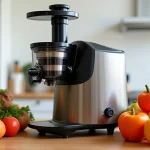
Looking for a juicer machine at Costco can be a bit tricky for newcomers. You see a lot of choices, and it’s hard to know where to start. But don’t worry, it’s simpler than it looks!
We’ll walk you through everything you need to know about finding the best juicer machine costco has to offer. Get ready to make your favorite fresh juices with ease!
Key Takeaways
- You can find good deals on juicer machines at Costco.
- Different types of juicers suit different needs.
- Check reviews to see what others think about a juicer.
- Consider how easy a juicer is to clean.
- Think about the size and power you need for juicing.
- Costco’s return policy can be helpful if you’re not sure.
Finding Your Juicer Machine at Costco
Costco is a popular place for shoppers looking for good value on home appliances, and juicer machines are no exception. They often carry well-known brands and sometimes offer exclusive models or packages. When you walk into a Costco, you might see a selection of juicers on display, especially during peak seasons or around holidays.
The appeal of Costco is their bulk buying power, which can translate into lower prices for consumers. You might find that a juicer machine that would cost more elsewhere is available at a discounted rate at Costco.
However, the selection at Costco can change frequently. What’s available one week might not be there the next, making it a bit of a treasure hunt. This can be exciting for some, but for those who have a specific model in mind, it can be a challenge.
The information provided on the packaging might be limited, so it’s often a good idea to do some research online before you go. Knowing the type of juicer you want and what features are important will help you make a quick and informed decision when you find a good deal.
Types of Juicers Available
At Costco, you’ll typically find two main types of juicer machines: centrifugal and masticating (also called slow juicers). Centrifugal juicers are faster and often less expensive. They work by spinning a basket with a grater at high speeds to extract juice.
These are great for quick juicing and are generally easier to clean. They are a good entry point for beginners who want to start juicing without a big investment.
Masticating juicers work differently. They use a slow-rotating auger to crush and press fruits and vegetables. This method extracts more juice and retains more nutrients and enzymes because it doesn’t generate as much heat.
While they are usually more expensive and slower, they are excellent for leafy greens and tough vegetables. The juice produced is often smoother and has a longer shelf life. Costco might have both types, so understanding the difference helps you choose the one that fits your juicing habits best.
Another type you might occasionally see is a twin-gear juicer, which is a more advanced form of masticating juicer. These are known for their efficiency and ability to juice even the hardest ingredients. They are usually at the higher end of the price spectrum.
Understanding Juicer Features
When looking at a juicer machine at Costco, pay attention to several key features. The size of the chute is important; a wider chute means you can put in whole fruits or larger pieces, saving you prep time. Motor power is also a consideration; higher wattage generally means a more powerful machine capable of handling tougher ingredients.
For centrifugal juicers, speed settings can be useful; a lower speed is better for soft fruits, while a higher speed is for harder produce.
Ease of cleaning is paramount. Most juicers come with detachable parts that are dishwasher safe, but some are simpler to rinse and wipe down than others. Look for models with fewer parts or a design that prevents pulp from getting stuck in hard-to-reach places.
The materials used, such as BPA-free plastics and stainless steel, are also indicators of quality and durability. Some juicers also come with accessories like juice cups, pulp containers, and cleaning brushes.
Price Range and Value at Costco
The price of juicer machines at Costco can vary significantly. You might find basic centrifugal juicers starting in the $50 to $100 range. These are great for occasional use or if you are just starting out.
Mid-range models, which could be more powerful centrifugal juicers or entry-level masticating juicers, might cost between $100 and $200. High-end masticating juicers or those with premium features can go from $200 up to $300 or more. Costco’s pricing often reflects a good deal compared to other retailers because they buy in large quantities.
The value proposition at Costco is strong, especially if you can find a well-regarded brand on sale. They also offer a generous return policy, which reduces the risk of buying an appliance you might not be happy with. This peace of mind is a significant part of the Costco experience.
Always check the current price and compare it to online prices from other stores to ensure you’re getting the best value.
Reviews and Research Before You Buy
Even with a good price, it’s wise to research the specific juicer machine model you are considering. Costco’s website often has customer reviews, which can provide real-world insights into the performance and durability of a product. Outside of Costco, sites like Amazon, specialized kitchen appliance review blogs, and consumer reports offer in-depth analyses.
Look for patterns in reviews regarding juicing efficiency, ease of cleaning, noise levels, and customer service from the manufacturer.
When reading reviews, consider the source. Someone who juices daily will have different needs than someone who juices once a week. Pay attention to reviews that mention the types of fruits and vegetables they’ve juiced.
For example, a juicer that works well for oranges might struggle with fibrous celery. Understanding common issues reported by users can help you avoid potential frustrations down the line.
Choosing the Right Juicer Type for Your Needs
The decision between a centrifugal and a masticating juicer is one of the most important you’ll make. It’s not just about price; it’s about how you plan to use the machine and what you want to get out of your juice. Each type has its strengths and weaknesses, and knowing these will guide you to the best juicer machine costco has available for your lifestyle.
Centrifugal Juicers For Speed and Simplicity
Centrifugal juicers are known for their speed. They can process a lot of produce in a short amount of time. If you’re often in a rush in the morning and just want a quick glass of juice, this type is ideal.
The process involves feeding chopped produce into the chute, and the machine quickly spins it, separating the juice from the pulp. The motor in a centrifugal juicer operates at high RPMs (revolutions per minute), typically between 3,000 and 15,000 RPM. This high speed generates a centrifugal force that pushes the juice through a fine mesh screen.
These machines are generally more budget-friendly, making them a popular choice for people who are new to juicing. They are also typically larger, with wider chutes that can accommodate larger pieces of fruit and vegetables, reducing the need for extensive chopping. However, the high speed can generate heat, which some believe can degrade certain nutrients and enzymes in the juice.
They can also be louder than masticating juicers and may not be as efficient at juicing leafy greens or very soft fruits.
Pros of Centrifugal Juicers
- Fast juicing process, ideal for busy mornings.
- Generally more affordable than masticating juicers.
- Often have wider chutes, requiring less prep work.
- Simpler operation and easier for beginners to use.
The quick operation of a centrifugal juicer is a major draw. You can go from whole apple to fresh juice in under a minute. This efficiency makes juicing a practical part of a daily routine for many.
The cost savings are also significant; you can often find a good quality centrifugal juicer for less than half the price of a comparable masticating juicer.
Moreover, the wider chutes mean less time spent chopping. You can often feed in whole apples or large carrots, which streamlines the entire juicing experience. This ease of use is crucial for encouraging consistent juicing habits.
The straightforward design also means fewer parts to assemble and take apart for cleaning, which is a big plus for busy individuals.
Cons of Centrifugal Juicers
- Lower juice yield compared to masticating juicers, especially for leafy greens.
- Higher heat generation can potentially reduce nutrient content.
- Can be noisier due to the high-speed motor.
- Less effective for juicing soft fruits and leafy greens.
While fast, centrifugal juicers are not always the most efficient. You might find yourself needing to re-juice the pulp to extract more liquid, which negates some of the speed benefits. The heat generated by the motor and friction can also be a concern for those focused on maximizing nutritional intake.
Some studies suggest that prolonged exposure to heat can degrade heat-sensitive vitamins like Vitamin C.
The noise factor is another drawback. The high-speed spinning motor can be quite loud, which might be disruptive in a household, especially early in the morning or late at night. Finally, if your primary interest is juicing items like spinach, kale, or wheatgrass, a centrifugal juicer may leave you feeling disappointed with the amount of juice you get.
These items are often better handled by a slower, more crushing mechanism.
Masticating Juicers For Nutrient Preservation and Versatility
Masticating juicers, also known as slow juicers, operate at much lower speeds, typically between 40 and 160 RPM. They use a single auger (a screw-like mechanism) to crush and press the produce. This slow, gentle process extracts more juice, preserves more nutrients and enzymes, and produces less heat and foam.
This makes them excellent for anyone serious about the health benefits of their juice, especially when juicing leafy greens, herbs, and wheatgrass.
The juice from a masticating juicer tends to be smoother and has a pulp content that is very fine. Because of the slower extraction, the juice can also have a longer shelf life, staying fresh in the refrigerator for up to 48-72 hours, whereas centrifugal juice is best consumed immediately. While they are more expensive and take longer to juice, the superior yield and nutrient retention are often worth the investment for dedicated juicing enthusiasts.
Pros of Masticating Juicers
- Higher juice yield, especially from leafy greens and fibrous vegetables.
- Preserves more vitamins, minerals, and enzymes due to low-speed operation and minimal heat.
- Produces smoother juice with less oxidation and longer shelf life.
- Quieter operation compared to centrifugal juicers.
- Can often be used for other tasks like making nut butter or pasta.
The efficiency of masticating juicers is a significant advantage. You’ll find that you get more juice from the same amount of produce compared to a centrifugal model. This means less waste and potentially saving money on your grocery bill over time.
For those juicing items like kale, spinach, or parsley, the difference in yield can be dramatic. These machines are designed to extract every last drop.
The nutrient retention is another key benefit for health-conscious individuals. By operating at low speeds, masticating juicers minimize oxidation and heat, which can degrade delicate nutrients. This results in a juice that is closer to the raw produce, offering maximum nutritional value.
The smoother texture and reduced foam also make the juice more palatable for many people.
Furthermore, the versatility extends beyond just juicing. Many masticating juicers can be fitted with different attachments, allowing you to make sorbets, nut milks, baby food, or even extrude pasta. This makes them a multi-functional appliance in the kitchen, justifying their higher cost.
Cons of Masticating Juicers
- Slower juicing process, requiring more time.
- Generally more expensive than centrifugal juicers.
- May require more preparation, like chopping ingredients into smaller pieces.
- Cleaning can sometimes be more involved due to the auger and screen design.
The slower pace of juicing with a masticating machine means you need to allocate more time for this task. If you’re always in a hurry, this might be a dealbreaker. While the initial cost is higher, the long-term benefits of better yield and nutrient preservation can offset this for many users.
It’s a trade-off between immediate convenience and long-term value and health.
Some masticating juicers also have narrower chutes, meaning you’ll spend more time chopping fruits and vegetables into smaller pieces before feeding them into the machine. This extra preparation can add to the overall time commitment. Finally, while the juice is generally easier to clean, the auger and screen assembly can sometimes be trickier to get completely spotless, though most modern designs are quite user-friendly.
Juicer Machine Costco Specifics
When you’re at Costco, you’ll likely see models from brands like Breville, Cuisinart, or Omega. The models available can vary by location and season. It’s common for Costco to carry popular, reliable models that offer good bang for your buck.
For example, you might find a popular centrifugal juicer known for its ease of use and a robust masticating juicer that provides excellent juice quality.
The price difference between a centrifugal and a masticating juicer at Costco will be noticeable. A good centrifugal model might be priced between $70-$150, while a masticating one could range from $150-$300. Always check the in-store displays and Costco’s website for current offers.
You might even find a “Costco bundle” that includes extra accessories, such as a specialized cleaning brush or additional containers.
One of the biggest advantages of buying a juicer machine costco is their return policy. If you get home and realize the juicer isn’t the right fit for you, or if it has a defect, Costco typically allows returns within a generous timeframe. This makes purchasing a juicer a lower-risk decision.
Evaluating Juicer Performance and Features
Beyond just the type of juicer, several performance and feature aspects can make a big difference in your daily juicing experience. What sounds good on paper might not translate to easy use in your kitchen. Let’s break down what to look for in a juicer machine costco offers.
Motor Power and Speed
Motor power is often measured in wattage. For centrifugal juicers, a motor of 600 watts or more is generally considered good. This power allows it to efficiently spin the cutting disc at high speeds, extracting juice quickly.
Higher wattage can mean more durability and better performance on harder vegetables like carrots or beets. Some centrifugal juicers offer multiple speed settings. A lower speed (e.g., around 3,000 RPM) is useful for softer fruits and berries, while a higher speed (e.g., 10,000+ RPM) is needed for harder items.
Masticating juicers rely less on raw power and more on torque and the efficiency of the auger. While wattage isn’t as critical, the RPMs are. Slow speeds (40-160 RPM) are the hallmark of masticating juicers.
This slow speed ensures minimal heat generation and maximum nutrient preservation. A higher RPM within the masticating range might still produce more heat than a very low RPM model, so it’s about finding that sweet spot for your needs. A powerful motor in a masticating juicer ensures it can handle fibrous greens and hard roots without bogging down.
Consider what you’ll be juicing most often. If it’s mostly soft fruits like berries and oranges, a slightly less powerful motor might suffice. If you plan on tackling celery, ginger, and beets regularly, opt for more power and torque.
The juicer machine costco offers will usually list the motor specifications clearly.
Chute Size and Prep Work
The size of the feed chute, where you insert your fruits and vegetables, is a significant factor in how much prep work you’ll need to do. A wider chute, often found on centrifugal juicers, can accommodate whole apples, large carrots, or halved oranges. This drastically reduces chopping time, making the juicing process much faster and more convenient.
For example, an 8.5-inch chute can often take a whole apple, saving you the effort of slicing it into smaller pieces.
Masticating juicers tend to have narrower chutes. You might need to cut fruits and vegetables into smaller, manageable pieces, often 1-2 inches in size, to fit them into the chute. This means more time spent chopping before you can start juicing.
However, this isn’t necessarily a bad thing, as it can sometimes allow you to remove seeds or cores more easily, leading to a cleaner juice.
If your priority is speed and minimal fuss, a wider chute is essential. If you don’t mind a bit more preparation or you want to be more deliberate about what goes into your juice, a narrower chute is perfectly fine. Think about your typical morning routine when making this choice.
Ease of Cleaning
This is arguably one of the most crucial factors in whether you’ll continue to use your juicer regularly. A juicer that is difficult to clean will likely end up gathering dust. Look for juicers with parts that are easy to detach and rinse.
Many modern juicers are designed with smooth surfaces and minimal nooks and crannies where pulp can get stuck. Dishwasher-safe parts are a major convenience, but a quick rinse and wipe down should be manageable for all components.
Centrifugal juicers often have a pulp container that can be a bit messy to empty and clean. Some models have a brush specifically designed for cleaning the mesh filter. Masticating juicers, with their auger and screen, can sometimes require a bit more attention to detail.
However, many come with cleaning brushes and tools that make the job straightforward. Some models even have a “purify” function where you run water through them after initial rinsing to help dislodge any remaining bits.
A good indicator of ease of cleaning is looking at reviews that specifically mention this aspect. If multiple users complain about cleaning a particular model, it’s a red flag. Ultimately, a juicer that is easy and quick to clean will encourage more frequent use, leading to more consistent healthy habits.
Juice Quality and Yield
Juice quality refers to the texture, clarity, and nutritional content of the juice. As discussed, masticating juicers typically produce a higher quality juice. The juice is smoother, less foamy, and retains more vitamins and enzymes because of the gentle extraction process.
The yield is also generally higher, meaning you get more juice from the same amount of produce.
Centrifugal juicers produce a juice that can be more frothy and may oxidize faster. While still nutritious, the nutrient profile might be slightly diminished compared to juice from a masticating juicer, especially concerning heat-sensitive vitamins. However, for many, the juice quality from a centrifugal model is perfectly acceptable, especially when consumed fresh.
When looking at a juicer machine costco, consider your personal definition of “quality.” If you’re an athlete or highly health-conscious, the premium quality from a masticating juicer might be worth the extra cost and effort. If you’re looking for a healthy drink without getting too technical, a centrifugal juicer will likely suffice.
Material and Durability
The materials used in a juicer’s construction play a significant role in its durability and longevity. Look for juicers made with high-quality, food-grade materials. Stainless steel components are often preferred for their durability and ease of cleaning.
BPA-free plastics are also common and considered safe for food contact. Avoid juicers made with cheap, flimsy plastic, as these may crack or degrade over time.
A sturdy base and a well-built motor housing are also indicators of quality. A juicer should feel stable on your countertop, even when operating at high speeds. The warranty offered by the manufacturer is another good indicator of durability and the company’s confidence in their product.
Longer warranties (3-5 years or more) are generally a good sign.
When you’re at Costco, pick up the juicer (if it’s on display) to feel its weight and assess the build quality. Read product descriptions carefully to understand the materials used. A well-made juicer is an investment that will serve you for years to come.
Juicer Machine Costco Buying Guide
Now that you understand the different types and features, let’s put it all together into a practical buying guide for your trip to Costco. Making the right choice means considering your budget, your juicing habits, and your kitchen space.
Setting Your Budget
The first step is always to determine how much you’re willing to spend. As we’ve seen, juicer prices vary widely. A reasonable budget for a good quality centrifugal juicer is between $70 and $150.
For a solid masticating juicer, you’re looking at $150 to $300. Costco often has models at the higher end of the mid-range or the lower end of the premium range, offering good value.
Think about how often you’ll use the juicer. If it’s for occasional weekend smoothies, a less expensive model will do. If you plan on juicing daily as a core part of your diet, investing in a more durable and efficient machine will pay off in the long run through better yield and longevity.
Don’t forget to factor in the cost of produce, which can add up quickly.
Assessing Your Juicing Needs
Your personal juicing habits are the most important factor. Ask yourself these questions:
- How much time do you have for juicing each day?
- What types of fruits and vegetables do you plan to juice most often?
- Are you primarily interested in health benefits and nutrient preservation, or convenience?
- How much counter space do you have available?
- Are you looking for a machine that can do more than just juice?
If you’re a busy parent needing quick breakfast smoothies, a centrifugal juicer with a wide chute is likely your best bet. If you’re a health enthusiast aiming to maximize nutrients from a variety of produce, including leafy greens, a masticating juicer is the way to go. If you enjoy experimenting, look for a masticating juicer that can also make nut milks or pasta.
In-Store vs. Online Costco Shopping
Costco offers both in-store and online purchasing options for their juicer machines. Shopping in-store allows you to see the actual product, feel its weight, and check out the build quality firsthand. You can also take advantage of immediate availability.
However, the selection in-store can be limited and may vary by location.
Shopping online through Costco.com gives you access to a potentially wider range of models, including those that might not be stocked in your local warehouse. You can easily compare prices and read customer reviews. Online shopping also allows you to have the juicer delivered directly to your home.
Whichever method you choose, always check the product details and return policy carefully.
Understanding the Costco Return Policy
Costco is known for its customer-friendly return policy, and this extends to appliances like juicer machines. Generally, Costco accepts returns on most items within 90 days of purchase for a full refund. For certain product categories, like electronics, this timeframe might be shorter.
However, for home appliances, you typically have a good amount of time to evaluate your purchase. Always check the specific return policy for the juicer you are considering, as policies can sometimes have nuances.
This generous return policy is a significant advantage when buying a juicer machine costco. It means you can try out a juicer in your own kitchen and if it doesn’t meet your expectations, or if you discover a defect, you can return it without much hassle. This reduces the risk associated with buying a new appliance.
Common Myths Debunked
When shopping for a juicer, especially at a place like Costco where deals can be found, it’s helpful to clear up any misconceptions. Understanding what’s true versus what’s often believed can help you make a more informed decision.
Myth 1: All Juicers Are Difficult to Clean
This is a common belief, but it’s not true for all juicers. While some older or poorly designed models can be a hassle, many modern juicers, both centrifugal and masticating, are designed with ease of cleaning in mind. Look for models with fewer parts, smooth surfaces, and dishwasher-safe components.
Many juicers come with specialized cleaning brushes that make the task quick and efficient.
Myth 2: Centrifugal Juicers Destroy All Nutrients
While centrifugal juicers do generate more heat and can cause some nutrient degradation compared to masticating juicers, they don’t “destroy” all nutrients. The juice from a centrifugal juicer is still packed with vitamins, minerals, and beneficial plant compounds. For most people, the nutritional benefits are still substantial, and the speed and affordability make them a great entry point into juicing.
The key is to consume the juice relatively soon after making it.
Myth 3: Masticating Juicers Are Only For Health Nuts
While masticating juicers are favored by those prioritizing maximum nutrient retention and juice quality, they are not exclusively for “health nuts.” Anyone who appreciates a smoother, more concentrated juice, or who wants to juice a wide variety of produce including leafy greens, can benefit from a masticating juicer. Their versatility also means they can be used for other kitchen tasks, making them a valuable appliance for many home cooks.
Myth 4: A Juicer Is Too Expensive For Me
This might have been true in the past, but the market has evolved. As we’ve seen, you can find perfectly capable centrifugal juicers at Costco for under $100. These are great for getting started.
Even masticating juicers are becoming more accessible. When you consider the cost of buying fresh juices from a store or cafe, a home juicer can actually be a cost-effective way to consume more fruits and vegetables.
Frequently Asked Questions
Question: Can I find juicer machines at Costco year-round?
Answer: Costco typically carries a selection of juicer machines year-round, but the specific models and inventory can change. It’s a good idea to check their website or visit your local warehouse periodically, especially around seasons when healthy eating is popular, like spring or after the holidays.
Question: Are Costco’s juicer prices usually lower than other stores?
Answer: Yes, Costco’s business model of buying in bulk often allows them to offer competitive prices on appliances like juicers. You can often find good deals and value-added bundles at Costco.
Question: What is the difference between a centrifugal and masticating juicer?
Answer: Centrifugal juicers use high-speed spinning to extract juice, making them fast but potentially less efficient and with more heat. Masticating juicers use a slow-crushing method, yielding more juice, preserving more nutrients, and being quieter.
Question: Is it worth buying a juicer if I only juice occasionally?
Answer: If you only juice occasionally, a less expensive centrifugal juicer might be a good starting point. However, consider if the cost of the juicer and the produce will be more than buying fresh juices. For very infrequent use, the cost savings might not be there.
Question: What should I do if my juicer from Costco stops working?
Answer: Check the manufacturer’s warranty that comes with the juicer. If it’s within the warranty period, contact the manufacturer for repair or
Summary
Finding a juicer machine costco is a great way to get a quality appliance at a good price. You can choose between fast centrifugal models for convenience or nutrient-preserving masticating types for optimal health. Always consider your budget, what you’ll be juicing, and how easy it is to clean.
Costco’s return policy offers peace of mind as you explore making fresh, healthy juices at home.