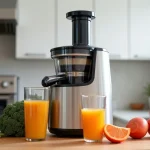
Choosing the right juicer can feel tricky, especially when you’re just starting out. There are so many options, and it’s hard to know which one is actually good. You might wonder, what is the best juicer machine to buy for your needs.
Don’t worry, we’ll make it simple. We’ll walk you through everything you need to know step-by-step to find the perfect juicer. Get ready to enjoy fresh juice!
Key Takeaways
- You will learn about different types of juicers and how they work.
- We will explain the benefits of owning a juicer for your health.
- You will discover what features to look for when buying a juicer.
- We will help you understand how to choose the best juicer for your budget.
- You will get tips on maintaining your juicer so it lasts.
- We will answer common questions people have about juicers.
Understanding Juicer Types
When you start looking for a juicer, you’ll see there are main kinds. Knowing the difference helps you pick the one that suits you best. These types work in slightly different ways to get the juice from your fruits and vegetables.
Centrifugal Juicers
Centrifugal juicers are very common. They work by spinning at a high speed. This spinning action grates fruits and vegetables.
Then, it uses centrifugal force to push the juice out through a mesh screen. The pulp is usually separated and goes into a separate bin.
- Pros: These are usually faster and less expensive. They’re also easy to use and clean for many people.
- Cons: They can be noisier and generate more heat. This heat might slightly reduce the nutrients in the juice. They also tend to be less efficient with leafy greens.
Many people start with a centrifugal juicer because it’s a good entry point. They are great for harder fruits and vegetables like apples and carrots.
Masticating Juicers
Masticating juicers, also called slow juicers, work differently. They use a single gear or auger that slowly crushes and presses the produce. This process extracts more juice and preserves more nutrients.
They operate at much lower speeds than centrifugal juicers.
- Pros: They produce high-quality juice with less oxidation. This means more vitamins and enzymes stay intact. They are also much better at juicing leafy greens and wheatgrass.
- Cons: They are typically slower and more expensive. Cleaning can sometimes take a bit longer due to more parts.
If you plan to juice a lot of greens or want the absolute best quality juice, a masticating juicer might be for you. Some masticating juicers are also called twin-gear juicers, which use two interlocking gears for even better extraction.
Twin-Gear Juicers
Twin-gear juicers are a type of masticating juicer. They use two interlocking gears that rotate inwards. As the gears turn, they grab the produce and press it against the screen to extract the juice.
This dual-gear action is very effective at breaking down tough fibers.
- Pros: These offer the highest juice yield and the least foam. They are excellent for juicing fibrous greens and even for making nut butter or pasta.
- Cons: They are often the most expensive type of juicer. Their cleaning process can be more involved than other types.
For the ultimate juicing experience and maximum nutrient retention, twin-gear juicers are top-tier. They excel with almost any type of produce.
Why Is What Is The Best Juicer Machine To Buy A Common Question
People often ask, what is the best juicer machine to buy because the market is full of choices. It’s not always clear which juicer will work best for everyone. Different machines are good for different things.
Some are fast, some are slow, some are cheap, and some are pricey. Beginners can feel overwhelmed by all the jargon and features.
Understanding the core differences between juicer types is the first step. Once you know how each one works, you can match a juicer to your lifestyle and juicing goals. This guide will break down these differences and help you see what matters most.
Choosing The Right Juicer For You
When you decide what is the best juicer machine to buy, think about your own life. How much time do you have in the morning? What kind of fruits and vegetables do you like to juice?
Do you want to juice a lot of greens, or mostly fruits?
Juicing Habits and Needs
Your juicing habits are a big clue. If you’re in a rush, a fast centrifugal juicer might be better. If you want to savor your juice and get every bit of goodness, a slower masticating juicer is a great choice.
- Daily Juicing: If you plan to juice every day, you’ll want a juicer that’s easy to clean. A simple design means less work after you enjoy your drink.
- Occasional Juicing: For weekend juicing or just a few times a week, you might pick a juicer based on its performance or price rather than ease of cleaning.
- Specific Produce: If you love green juices, look for a juicer specifically good at handling leafy greens.
Budget Considerations
Juicers range from under $100 to over $1000. Decide how much you want to spend before you start shopping. A good juicer is an investment, but you can find great options at various price points.
| Juicer Type | Typical Price Range | Best For |
|---|---|---|
| Centrifugal | $50 – $200 | Beginners, hard fruits/veg, speed |
| Masticating | $150 – $500 | Greens, nutrient retention, quiet operation |
| Twin-Gear | $300 – $1000+ | Maximum yield, variety of produce, highest quality |
Remember that a higher price doesn’t always mean better for your needs. Sometimes a simpler, less expensive model is perfect for what you want to do. Look for sales and read reviews to get the best value.
Key Features To Look For
When you are figuring out what is the best juicer machine to buy, pay attention to specific features. These details can make a big difference in how you use and enjoy your juicer.
Ease of Use and Cleaning
No one wants to spend more time cleaning than juicing. Look for juicers with fewer parts and simple assembly. Many models come with a brush to help with scrubbing.
Some parts might be dishwasher safe, which is a big plus.
- Disassembly: Can you take it apart easily?
- Parts Count: Fewer parts usually mean easier cleaning.
- Cleaning Tools: Does it come with a good cleaning brush?
- Dishwasher Safe Parts: This saves a lot of time and effort.
Motor Power and Speed
For centrifugal juicers, motor speed is important. Higher speeds can extract juice faster but might create more heat and noise. For masticating juicers, the motor speed is much lower, but its power is key to crushing tough ingredients.
A strong motor means the juicer won’t bog down when you feed it fibrous items.
When looking at masticating juicers, pay attention to the RPM (revolutions per minute). Lower RPMs (below 100) are generally better for preserving nutrients. For centrifugal juicers, a motor around 10,000 RPM or more is typical for fast juicing.
Juice Quality and Yield
Juice quality refers to how much pulp is in your juice and how much air is mixed in. Yield is how much juice you get from a certain amount of produce. Masticating and twin-gear juicers generally offer higher juice yields and less pulp than centrifugal models.
They also create less foam, which many people prefer.
For example, if you juice one pound of carrots, a good masticating juicer might give you 10-12 ounces of juice, while a centrifugal might give you 8-10 ounces. This difference adds up over time, especially if you juice a lot.
Size and Counter Space
Juicers can be quite large. Measure your counter space before buying to make sure it will fit. Some juicers are more compact, while others are quite tall.
Consider where you will store it when it’s not in use, too.
A tall juicer might not fit under your cabinets. A wide juicer might take up too much room on your counter. Think about how often you’ll use it; if it’s daily, you might want to leave it out.
Top Juicer Machine Recommendations
Now that you know the types and features, let’s look at some popular choices to help answer what is the best juicer machine to buy. These are brands and models that are well-regarded by users.
Centrifugal Juicer Examples
For a great entry-level centrifugal juicer, many people recommend brands like Breville or Cuisinart. These models are known for their power, ease of use, and affordability.
- Breville Juice Fountain Plus: This is a popular choice for its large chute size, allowing you to juice whole fruits and vegetables. It’s fast and relatively easy to clean.
- Cuisinart Compact Juice Extractor: This is a more budget-friendly option. It’s smaller, making it good for kitchens with limited space, and it performs well for basic juicing needs.
These juicers are good for apples, carrots, beets, and citrus fruits. They might not be the best for leafy greens, but they offer a quick way to get fresh juice without a big investment.
Masticating Juicer Examples
When it comes to masticating juicers, brands like Omega, Nama, and Hurom are top contenders. They offer excellent juice quality and nutrient retention.
- Omega Juicers (e.g., J400S, NC900HDC): Omega makes durable and reliable masticating juicers. Their single-auger models are known for being quiet and efficient, especially with greens. The NC900HDC is a vertical masticating juicer that also comes with attachments for making pasta and nut butter.
- Nama Vitality Cold Press Juicer (JVM275): This vertical masticating juicer is praised for its ease of use and cleaning. It’s designed to be very efficient and produce high-quality juice. Many users find it very user-friendly.
- Hurom Juicers: Hurom is another leader in slow juicer technology. Their models are known for their sleek design and excellent performance, particularly with leafy greens and soft fruits.
These juicers are a bigger investment but deliver superior juice. They are ideal if you are serious about health and want to maximize the nutritional benefits of your fruits and vegetables.
Twin-Gear Juicer Examples
For the absolute best in juice extraction and versatility, twin-gear juicers are the way to go. Brands like Green Star and Champion are well-known in this category.
- Green Star Elite Juicer: This is a high-performance twin-gear juicer that consistently gets rave reviews for its juice yield and quality. It excels at juicing everything from hard vegetables to fibrous greens.
- Champion Juicers (e.g., Champion Juicer 2000): While some Champion models are masticating, their twin-gear options are very powerful and efficient. They are built to last and are a favorite for heavy-duty juicing.
These juicers can also be used for making other things like sorbets and nut butters, making them a true kitchen workhorse.
Maintaining Your Juicer
To make sure your juicer lasts a long time, proper care is important. This is true no matter what is the best juicer machine to buy. Regular cleaning and some basic maintenance will keep it running smoothly.
Daily Cleaning Tips
The best time to clean your juicer is right after you use it. Juice can dry and become harder to remove if left sitting. Most juicers can be cleaned quickly with warm water and a little soap.
- Rinse Immediately: As soon as you finish juicing, rinse all the parts under running water.
- Scrub Gently: Use the brush that came with your juicer to remove any pulp or residue from the screens and parts.
- Air Dry: Let the parts air dry completely before putting them away to prevent mold or mildew.
A quick 5-minute cleaning routine can save you a lot of hassle later. This simple step helps keep your juicer in top condition.
Deep Cleaning and Storage
Once a week, or as needed, you might want to do a deeper clean. This involves taking the juicer apart more thoroughly and cleaning any nooks and crannies. For long-term storage, make sure the juicer is completely dry and store it in a clean, dry place.
Some juicers have parts that can be soaked in a vinegar and water solution to remove stubborn stains or odors. Always check your juicer’s manual for specific cleaning and maintenance advice.
Common Myths Debunked
Myth 1: All Juicers Produce The Same Quality Juice
This is not true. As we’ve discussed, different juicer types extract juice in different ways. Centrifugal juicers can introduce more air and heat, which can affect nutrient levels.
Masticating and twin-gear juicers use a slower, pressing method that results in higher quality juice with less oxidation and more preserved nutrients.
Myth 2: Juicers Are Too Difficult To Clean
While some juicers have more parts than others, most modern juicers are designed with cleaning in mind. Many have dishwasher-safe parts, and immediate rinsing after use makes cleaning quick and easy. It’s often much faster to clean a juicer than to hand-wash a lot of dishes.
Myth 3: Juicing Destroys All The Fiber
Juicing does separate the fiber from the juice, creating a liquid that is easier to digest and absorb nutrients from. However, the fiber itself isn’t destroyed; it’s collected as pulp. If you want fiber, you can compost the pulp or use it in other recipes like muffins or veggie burgers.
Myth 4: Juicers Are Only For Health Enthusiasts
Anyone can enjoy fresh juice! Whether you’re looking to boost your energy, get more fruits and vegetables into your diet, or just enjoy a tasty drink, a juicer can be a great addition to any kitchen. They make healthy choices convenient and delicious.
Frequently Asked Questions
Question: What is the main difference between a centrifugal and a masticating juicer?
Answer: A centrifugal juicer uses a fast-spinning blade to shred produce and separate juice through force. A masticating juicer uses a slow-moving auger to crush and press produce, extracting more juice with less heat and oxidation.
Question: Can I juice leafy greens with any juicer?
Answer: Masticating and twin-gear juicers are much better at juicing leafy greens like spinach and kale. Centrifugal juicers can juice them, but they are less efficient and may not extract as much juice.
Question: How much juice can I expect from a pound of produce?
Answer: This varies greatly by produce type and juicer. Generally, masticating juicers yield more juice than centrifugal juicers, often extracting up to 20% more juice.
Question: Are juicers expensive?
Answer: Juicer prices vary widely. Basic centrifugal juicers can be found for under $100, while high-end masticating and twin-gear juicers can cost several hundred dollars or more.
Question: Is juicing healthier than eating whole fruits and vegetables?
Answer: Juicing provides concentrated nutrients that are easily absorbed. Eating whole fruits and vegetables provides fiber, which is also important for health. They serve different but complementary roles in a healthy diet.
Conclusion
Now you know what is the best juicer machine to buy. It depends on your needs, budget, and how you plan to use it. Consider speed, yield, ease of cleaning, and your favorite produce.
Find the juicer that fits your lifestyle. Enjoy fresh, healthy juice every day!